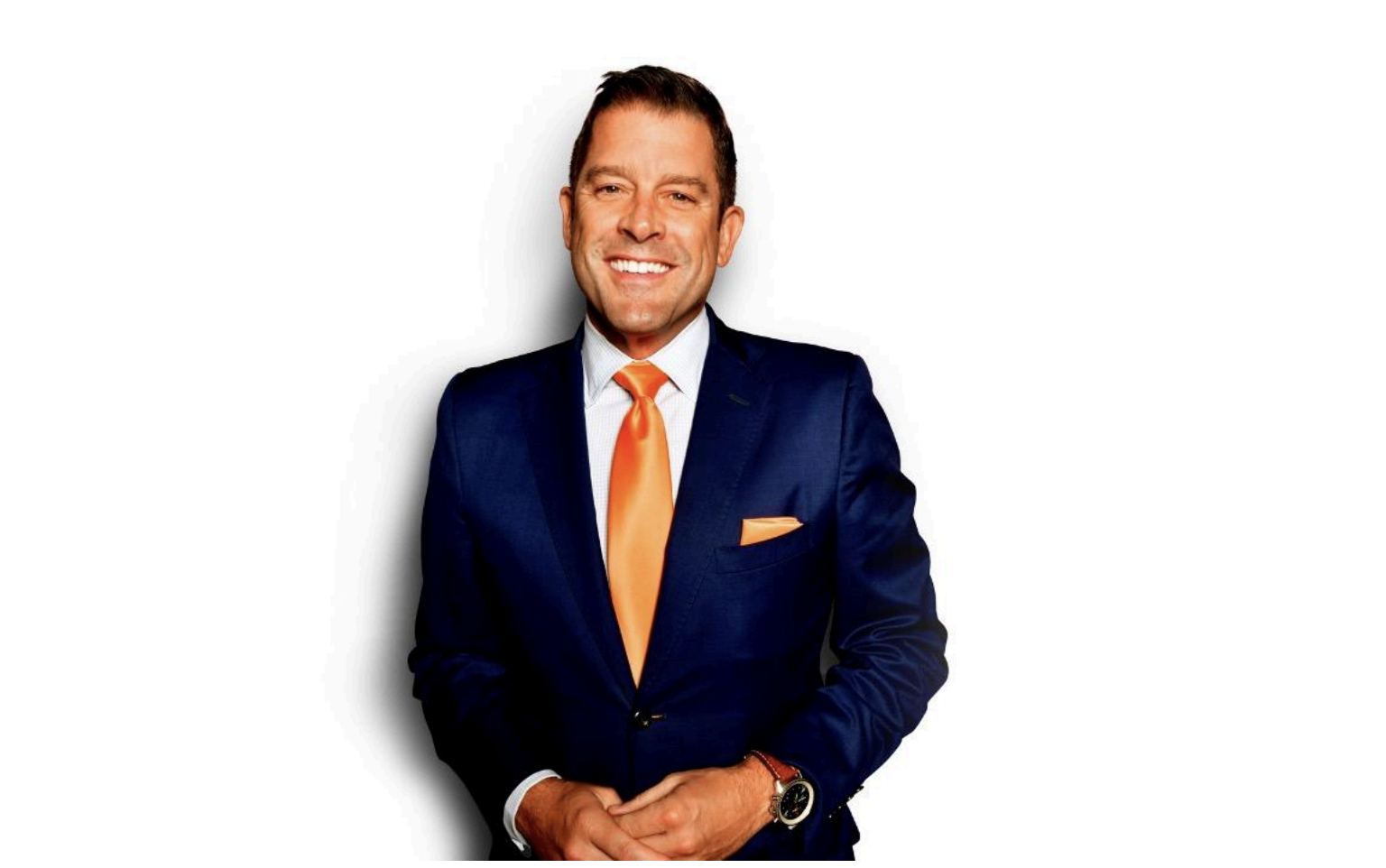
The lessons Rob Johnson learned from two giants of journalism ground him to this day. The first of those giants was Bernard Shaw, the longtime CNN lead anchor. John Drury, who anchored news broadcasts in Chicago for four decades, was the second.
He remembers their impact on viewers, their strong moral compasses and the way they always treated everyone they worked with like human beings.
“I always wanted to build my professional life around people like that, people who I thought were great communicators. I always wanted to be like them,” Johnson says.
Several decades later, Rob is the founder and CEO of Rob Johnson Communications, a strategic communications firm specializing in corporate and internal comms. His book, titled “Overcommunicate: A Guide for Business Executives and Aspiring Leaders,” will release in early 2026.
Through it all, Johnson has maintained a staunch commitment to ethical leadership in his field. He discussed his approach with Big Shoes Network in a wide-ranging interview covering best practices for client relationships, AI guardrails and why overcommunicating is the best policy.
When you founded Rob Johnson Communications, you made integrity part of your brand promise. It’s front and center on your website. Why was that important to you, and what do you think makes your approach distinct?
I spent more than 25 years working in television journalism. In that world, trust was everything. You had to be trustworthy, and you had to be someone people wanted to watch.
For me, trust was always my currency. People might not always like a story I did, but I could honestly say I was fair to everyone involved. That was trust, that was integrity. When I transitioned into starting Rob Johnson Communications, I knew I had built my career on trust and integrity, and that it was imperative that those values became a cornerstone of the business.
When you’re working with clients, they need to know you’re someone who will strive to get it right, act in their best interest and approach their work with honesty.
You had a long career as a news anchor. In what ways are newsroom ethics and PR ethics similar, and in what ways are they different?
They’re similar in that both require a commitment to facts, clarity and effective communication. You want the facts to speak for themselves, and you want people to clearly understand your message and your goals.
But let’s be clear; in journalism, you’re reporting on stories. In public relations, you’re working on behalf of a client, highlighting their attributes and presenting them in the most positive and accurate light possible. You’re still telling stories, but they are client stories, not journalistic ones.
The communication skills are transferable, but it’s important to clearly delineate the two.
There can be tension between journalistic instincts and PR work, especially around transparency. How do you navigate that tension?
I’m never going to intentionally mislead anyone. I’m going to identify the best attributes of a client and focus on those, whether that’s their story, their product or their service.
Clients hire me for my ideas and expertise, bur at the end of the day, clients don’t have to take that advice. If I advise them to do something and they don’t do it, all I can do is say, “Well, I weighed in.”
There have been one or two occasions when I’ve fired clients who didn’t tell me the whole story. It was a crisis situation, and they sort of hung me out to dry by not looping me into the internal conversation. In strategy, PR and marketing, you have to be able to see around corners. If you’re prevented from doing that, if you’re put in a situation where ethically you have a problem, I just won’t work with those folks.
Your upcoming book is Overcommunicate: A Guide for Business Executives and Aspiring Leaders. The term “overcommunication” can have a negative connotation. How do you define it?
I said to my publisher right away that we were going to have a marketing issue when I shared the title, because some people talk about overcommunicating as a negative. He said that’s why it was important for me to define it on my terms throughout the book.
The way I view it is that if you’re working with a team and you ask yourself, “Did I communicate my message enough?” If the answer is no, you need to go the extra mile. You need to make sure everyone understands the objectives, the priorities and the task at hand.
This is not about micromanaging. This not about, “well, I sent them 70 emails, why didn’t anything get done?” When you overcommunicate needless information, that’s just noise. I’m talking about overcommunicating to make sure everyone is aligned.
You’ve talked on your podcast with Harbinger Group CEO Eileen Rochford about navigating the “misinformation highway.” What are clients most stressed about in that environment?
You’re really worried about someone misrepresenting your brand. Maybe they’re using a whisper campaign to knock you off your stride or maybe something related to them is going to be misrepresented. It could be related to an event that actually happened, something that people put a spin on, or it could be something that never happened at all.
When you’re dealing with things like this, you need to stay ahead of the information environment. You’re not going to be able to respond to every little thing. But the more you control your narrative, the more you can stay out in front and be proactive, not reactive, the better chance your messaging is the one that dominates.
I’m sure you have thought a lot about ethical guardrails around AI use. What are some of those lines that you draw for yourself and for your clients?
When AI first came out, it was this scary thing. It was going to take everybody's jobs. And I think people now realize that's not going to happen. It's going to take some jobs, but there's also the potential to be incredibly efficient.
There is also a little bit of a fantasyland element to this, though, where some of the stuff that an AI spits back at you may not be entirely correct, and that’s where the human element comes in. When you receive information that is AI generated, you as a human being, as a subject matter expert in your field, need to look at it and make it your own. You at least need to be sure it’s factually correct and captures the spirit of what you are trying to convey.
You’ve served on nonprofit boards, including Special Olympics Illinois and the Concussion Legacy Foundation. Has that work influenced your perspective on communication and storytelling? If so, how?
Yes, I am the chair of the marketing and communications committee of Special Olympics Illinois and I’m always talking to the marketing department about initiatives they’re working on, storytelling and things of that nature.
That work has reinforced what I believe about storytelling, about having an authentic message and then executing on it. It’s also fun working in an environment where I’m not doing the day-to-day work, but I’m using my expertise to help the people who are doing it be more fruitful. I love every bit of it. I love putting people in a position to succeed.