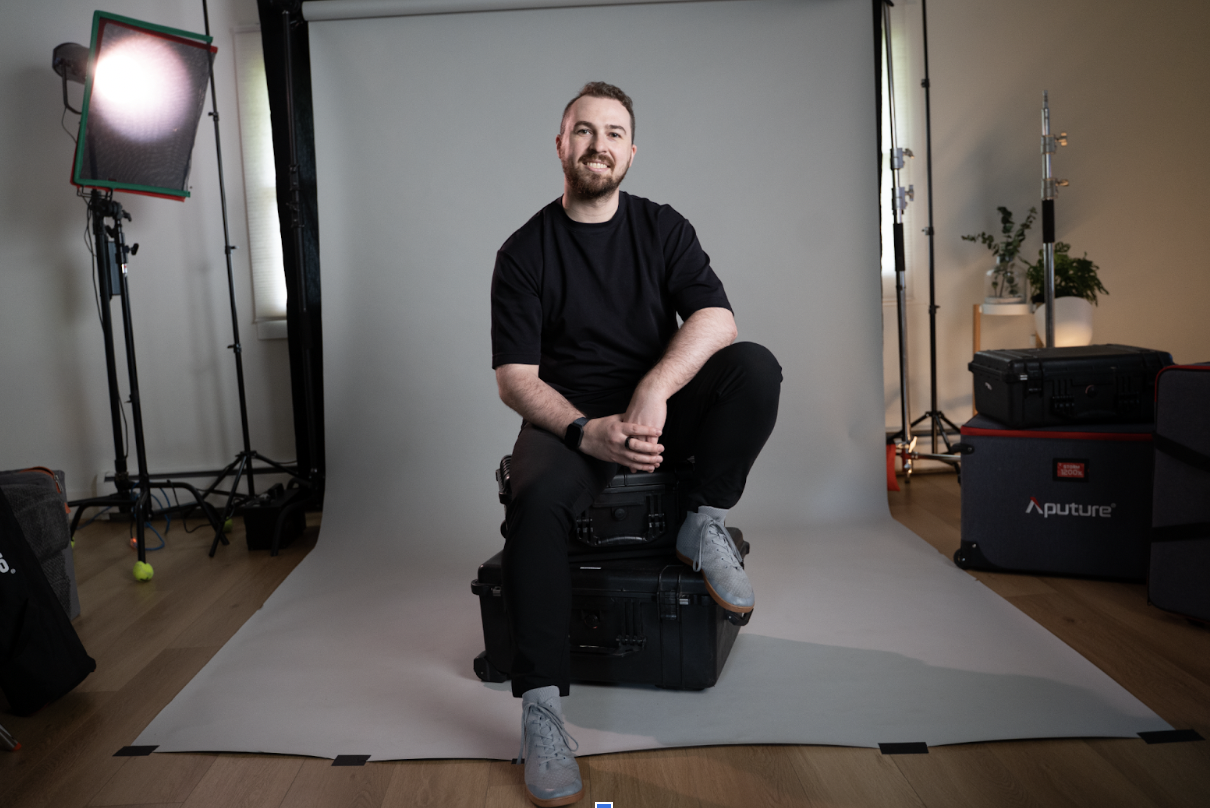
Eric “Dids” Didier was behind a camera at the Major League of Gaming, capturing fleeting moments that made him realize a picture could tell a story as vividly as words ever could.
That spark turned into a passion for storytelling that’s carried him from Twitch streams to large-scale film sets, and now, to shaping Milwaukee’s creative scene through story-first filmmaking. Today, he is the co-founder of Media Bolt Productions.
In this conversation, Dids shares how curiosity fuels innovation, what Dreams Fuel Greatness taught him about representation, and why the best stories always start with “why.”
What first drew you to storytelling through video. Was there a particular moment when you realized this was what you wanted to do?
I think for me it was when I was taking pictures for the Major League of Gaming. I was capturing moments that for the first time I said to myself “Wow, there is truly a story to be told with a camera.” It was those moments that told me there is a path for me to tell stories from the local area and beyond to drive inspiration through my work!
You’ve built a career from Twitch streaming to co-founding multiple ventures. How did previous chapters prepare you for starting Media Bolt Productions?
I think the most beautiful part of my journey is how I got to this point. It was not glamorous at all, nor was it a path without trials, but I take lessons from those moments and apply them every day. From Twitch streaming and learning about the importance of community and now applying that today into our Podcast and growing the filmmaking community here in Milwaukee to the Misfits teaching me how to be a business owner in many ways, as simple as that sounds, it has truly made a large impact on our current success.
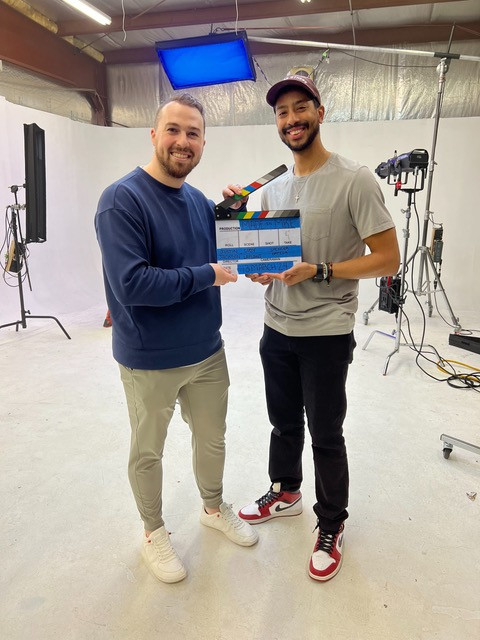
What inspired you to take the leap from being behind the camera to co-founding a full-service production company?
I always knew I wanted to be my own boss. I never knew in what capacity that would show up as, but I knew it deep down taking inspiration from seeing my dad own a business as a kid. I have always wanted to be the driver of my own success, and sometimes failures, as I’ve also experienced. A large part of this for me was to be able to search for (or create) the stories I thought were worth telling, and in doing so, inspiring as many people as I can to become everything they can through my work.
What’s a project that pushed you outside your comfort zone but ended up redefining how you work? Our first large scale production, Made in Milwaukee, was a big moment for me being outside of my comfort zone. From my first company, I was accustomed to wearing a lot of hats, but this was the first project where I had one job, First Assistant Camera, and it was my first time ever taking that task on, but I loved every minute of it and work as an Assistant Camera on all of our projects (and even some freelance ones) to this day! It was the first time for my co-founder, Justin, and I were able to have more than just us on a shoot, and now we have worked with so many other amazing creatives we have been blessed to hire on our larger productions whenever we get a chance to!
Media Bolt emphasizes “story-first video marketing.” What does that mean in practice, and how do you translate a client’s brand into a compelling narrative?
Story first video for us means that our work will leave a lasting impact on its viewers. It isn’t just a trend for us, our work is something that is timeless, and will bring customers that stay, not just unsubscribe to your newsletter when the sale is over. In practice that means a lot of showing the why behind businesses and their essence. From founders videos, to company highlights and more, we want viewers to feel the passion behind the businesses and individuals we create videos for so that they can achieve the long term goals they set out to achieve. We want to help create that feeling of being on a first name basis with everyone with our work. And then you add on top of that the stories we create internally like Dreams Fuel Greatness, or Made in Milwaukee, that really bring this idea home and help inspire viewers to achieve their dreams.
Your film Dreams Fuel Greatness explores persistence and representation in sports. What personal meaning does that project hold for you?
My upbringing instilled in me a commitment to fairness and equity. As I’ve built teams and companies, I’ve sought out environments and experiences that expand my perspective and deepen my understanding of the barriers others face. That journey continues to shape how I show up as both a leader and a human.
Coming from a city that is roughly 91% white or non-hispanic, my journey has been shaped by a desire to broaden my perspective and ensure that opportunity and representation are not reserved for a select few. I’ve always felt a responsibility and a calling to help create spaces where people from all backgrounds can see themselves, feel valued, and pursue big dreams.
While Dreams Fuel Greatness began as Justin’s love letter to baseball and his experience as a former professional player of color, the story resonated deeply with me as well for many of the same reasons. It represents the kind of narrative that gives those who rarely see themselves on screen a sense of belonging, belief, and inspiration to chase what feels possible.
How do you stay innovative in an industry where technology and trends shift daily?
For us we like to almost use the terms ‘staying innovative’ and ‘staying curious’ synonymously. As with many fields, AI is a looming curtain over us to potentially take our jobs, but we look at it differently. Our work tells stories from human interaction, the kind of work we feel that if the worst case scenario happens and AI runs the world, there will be effective novelty in.
We take the approach of using AI to help us run more effectively and help us get ideas down and thought through such that our work can be done that much more effectively. Even outside of AI, cameras are always evolving and we try to create as many spec pieces that challenge us to use new technology or maybe a camera body we haven’t had hands on experience with so that when a large project comes our way to the Milwaukee area (especially with news of the Film Incentives), we are ready to handle whatever their needs may be.
How do you define success now compared to when you started?
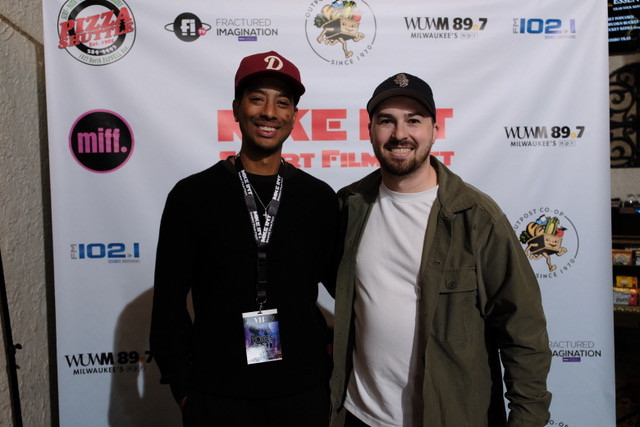
Celebrating wins of any size has always been tough for me, not sure if I always am looking for what’s next or if I may even be comparing the size of the win to what others may be experiencing, but I think recently with Dreams Fuel Greatness winning awards in the film fest circuit, it is hard to deny success. The funny part though as I think of this, is that the goal posts of success I think are always moving. Sometimes for me it has truly been “Can I pay myself this month?” from years ago, and sometimes it is “Wow our film won 3 awards at this festival!” more recently. I like to think that there are always more stories to be told, so celebrating each win is admittedly sometimes given too little credit within my mind, but that is something I am working on for sure.
Creators can struggle to turn passion into a sustainable business. What advice would you give someone trying to make that transition?
The thing we tell anyone who asks us this or something like this is to go get on some film sets. There are so many disciplines that are found within a film set that you are bound to pick up on something you might want to explore further. It isn’t just the camera team either. It's lighting, set design, producing, directing, audio techs, etc. Absorb as much as you can from those around you and find your true passion within those pockets.
What’s the most underrated skill a video creator or storyteller should develop early on?
Explore people's why and religiously figure out how to tell it (you can even begin with your own why). Think about any piece of art you love, what happens? You feel something. It could be a wide range of emotions, but that artist wanted you to feel that. Learn how to do that within your videos and yes a lot of it will be trial and error, it is something even the best are always refining, but it is a super useful skill to have.
How do you keep your creativity and motivation alive after years of producing content?
There are two parts of this for me. Internally it is taking something at home and trying to make engaging content with it, trying new editing techniques that might make it into client work someday, and then externally being a sponge on set and learning as much as I can from those around me. It sounds simple, but there is always something you can take from a collaborator.
Finally, if you could give your 20-year-old self one piece of advice about storytelling, business, or life, what would it be?
The biggest thing I would tell my younger self is to not take things so seriously. The important things in life are things that don’t have price tags. I wouldn’t be who I am today without the experiences I have had, so I don’t think it is a ‘do this not that’ mentality from me. I would tell that version of myself to stay curious, stay active, and love those around you as much as you can.