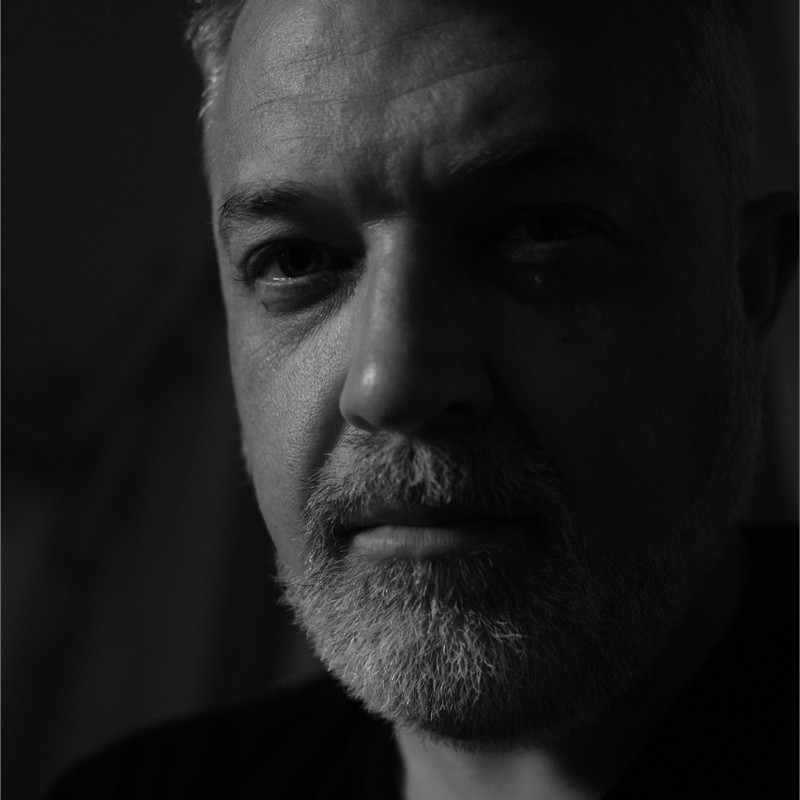
In this Q+A, Dennis Jenders digs into the healthy tension between data and intuition, what an Executive Strategy Director actually does all day (spoiler: it’s a lot of clarity-making), why “being human is the advantage” in an AI-shaped decade, and how you can build a big-league career without leaving Milwaukee behind.
You describe yourself as operating at the intersection of creativity and technology. When did you first realize that was your lane?
I didn’t have the language for it early in my career. What I was certain of was my curiosity to make things and understand how they worked. Over time, I found myself using code and technology to create beautiful things, not just functional ones.
That intersection was where my ideas stopped being hypothetical and became real. What I now realize is that it’s simply my nature. As a child, I was often labeled a daydreamer. In response, I was challenged to be more rational, more practical.
Eventually, I learned that I didn’t have to choose. Once I embraced both sides, I stopped seeing creativity and technology as separate skills. They became a way to translate wonder into something people could actually experience.
Take us back to the Milwaukee Journal Sentinel days. What did those early years in interactive design and digital advertising teach you that still shapes how you work today?
In many ways, I miss those years. My career began in 1999, so I grew and matured with the technology and the revolution that became the internet we know today.
Those years were foundational. First, they taught me how to ship. Journalism has deadlines. You learn quickly to make wise decisions and put the audience first.
More practically, we were at the forefront of a new medium for content and advertising. We weren’t just doing the work, we were inventing ways of working. That gave me the opportunity to collaborate directly with nearly every major business in the Milwaukee area.
I also learned deep respect for the craft. That environment instilled a belief that honesty, ideas, and execution matter. Just as important, it taught me to be someone people could count on. That spoke to my blue-collar nature. Do the work the right way, keep the audience at the center, and deliver with integrity. That mindset still shapes how I work today.
Your career has moved from media to agencies to global experiential work. Looking back, what was the first big “jump” you made that felt risky at the time but proved pivotal?
The first real jump was leaving the comfort of the *Milwaukee Journal Sentinel* and diving into the agency world. The foundation I built there translated well into a strategic role at Hanson Dodge.
I’m still very thankful to Ken Hanson and Tim Dodge for giving me that opportunity. The pace of the newsroom prepared me for the hectic, often chaotic nature of agency life, but the work forced me to stretch in new ways. I had to think beyond formats and executions and start thinking in terms of systems, business problems, and brands.
Looking back, I now realize I had reached a natural ceiling at the *Journal*. Recognizing when you’re no longer growing. For me, that’s always been the signal to change something or move on.
That shift fundamentally changed how I saw my role. I stopped being someone who made things and started becoming someone who helped shape direction. That pivot set everything else in motion.
Related: Discover marketing jobs near Milwaukee
You’ve worked with some massive brands, but you talk about success in terms of scholarships, fighting lung cancer stigma, and giving fans remarkable experiences. What’s one project (or a few) that felt truly meaningful to you on a human level?
Marketing, by nature, is temporal. Campaigns end. Platforms change. Even great work moves on quickly. The projects that stay with me are the ones where the impact was tangible, where I could point to real people who were genuinely affected.
While at Laughlin Constable, I worked with the Lung Cancer Alliance to help fight the stigma around lung cancer. That experience taught me how powerful a sharp, human insight can be. When you get it right, the work doesn’t just change perception; it can change conversations, behavior, and how people see themselves. What a humbling experience.
Looking back, you realize how rare those moments are. Clients come and go. Awards fade. But being in service of others, that lesson stays with you and reshapes how you define success.
Honestly, one of the most meaningful projects of my career wasn’t a campaign at all. It was preparing myself to teach and mentor students at Marquette University. Teaching forced me to articulate how I think, how to listen, how to understand others, how to move at the speed of culture, and why curiosity is essential. That process made me a better marketer, leader, and human.
Those moments remind me that marketing isn’t just persuasion, it’s participation. When the work respects people, meets them where they are, and gives something back, that’s when it truly matters.
How did your time at local agencies help grow your career, and did it take you where you expected?
My time at local agencies gave me reps. In the moment, though, I wasn’t fixated on where I was headed. I was focused on gaining experience and collecting experiences.
That time taught me how to guide work, grow young marketers, and give back to the community that gave me my start. It also taught me confidence. I learned how to stand up in a room, present ideas, and be heard. Anyone who’s pitched work knows that feeling – it’s intoxicating, and it teaches you what it means to own your thinking.
More importantly, it helped me get in touch with myself. I was developing my own perspective and point of view instead of chasing trends.
It didn’t take me where I expected, mostly because I didn’t have a fixed destination. It was always a journey where my only intention was to accumulate skills, perspectives, and relationships. And while those years kept me rooted in my hometown, they also opened doors to bigger and bigger opportunities, working with clients in Chicago and New York.
Looking back, I became a better version of myself. Someone who learned to be a guardian of others, especially my team, and who stays hungry and curious.
In your current role, how would you explain what an Executive Strategy Director does day-to-day?
I actually laughed when I saw this question -- because of what my day-to-day really looks like. From the outside, people may see a mountain of work and chaos. In reality, my job is to create clarity.
That means framing the problems, asking better questions, and helping teams connect the dots between culture, business, and experience.
I spend a lot of time translating between clients and teams, data and intuition, ambition and feasibility. It’s less about having all the answers and more about creating the conditions for great thinking and wonder to happen.
You talk about a “healthy tension” between the left and right brain. How do you personally balance data, rigor, and frameworks with imagination and lateral thinking?
Over the years, I’ve come to deeply trust my intuition. It’s what happens when experience, taste, and perspective compound over time.
We know that data is more accessible than ever, and we often see the same or similar frameworks used across the industry. I still use information to understand the landscape, but at some point you have to trust your point of view and your ability to sense what feels real and relevant.
Structure gives ideas something to push against. Intuition, on the other hand, tells you when to be mischievous and break the rules.
What I balance now is knowing when to step in, when to step back, and when to protect fragile ideas long enough for them to become exciting and meaningful.
You’ve stated that your mantra is “wake up early, out-ideate, out-innovate, out-hustle, repeat.” Where did that work ethic come from, and how do you keep it from turning into burnout?
My work ethic comes from my blue-collar upbringing and watching my father. He worked the same job from eighteen until he retired, missing only one day when he was seriously ill. Responsibility was something he modeled every single day.
To get ahead, I learned the importance of hard work and discipline. My passion fueled that hustle. I was just as committed to dreaming big as I was to making those dreams real.
Over time, I’ve learned that hustle without purpose can cause burnout. I’ve become intentional about building rhythms that include reflection and recovery. That balance is what keeps the work sustainable for me.
You’ve built a big-league career while staying rooted in Milwaukee. What would you say to someone who thinks they have to move to New York, LA, or London to work on global brands?
I’ve always loved Milwaukee because it offers a balance that’s hard to find elsewhere. I’m as close to Chicago as I am to the north woods and nature, and that matters to me.
What I’ve learned over time is that my ideas, intuition, and ability to execute travel just as well as I do. Some people believe you have to leave to grow. I’ve left to gain perspective and bring it back with me.
We’re also living in a more connected, flexible world. While many companies are pulling people back into offices, one thing I appreciate about GMR Marketing is its belief that the best work comes from recruiting great people wherever they are. I embrace that mindset.
You’ve led social, digital, and now broader brand and experience strategy. How has the role of “social media” changed in your mind from when you started to now?
Early on, social media was about community and connection. It felt like a shared experience and a shift from a one-way dialogue to a conversation.
Today, social is less about community and more about behavior. It’s shaped by attention and algorithms. It doesn’t just reflect culture, it amplifies, accelerates, and often distorts it.
The real evolution is in behavior and agency. Power has shifted from brands to creators and from posting content to creating culture.
Social is no longer about sharing. It’s more mature, more intentional, and more reflective of who we are. Because of that, social informs how experiences are designed and how stories are told.
If you were building a syllabus for “How to Build a Career in Modern Marketing” for the next 10 years, what skills or mindsets would absolutely be on it?
In a decade that may be shaped by AI, automation, and cultural acceleration, I'd start with one fundamental belief – being human is the advantage.
Technology and AI will continue to change our relationship with work, creativity, and even with one another. What it can’t replace is human judgment, taste, empathy, and lived experience.
First, cultural fluency should be a core competency. Not just knowing people, but reading cultural signals, tensions, and emerging narratives. Culture moves fast, and relevance comes from listening, not just reacting.
I'd also say AI literacy without AI dependency. Knowing when technology can accelerate the work and when human judgment, ethics, and taste are irreplaceable. The future belongs to people who can balance the analog and the algorithm.
I'd also emphasize storytelling. There is power in the ability to articulate a compelling narrative.
In short, in an age of infinite output, or slop, taste becomes a strategic advantage. I would encourage everyone to develop the ability to discern what matters, what resonates, and what’s worth pursuing.
Underneath all of it is emotional intelligence, because in a world increasingly shaped by machines, our job isn’t just to market better. It’s to help make the world feel more human.
A lot of younger marketers feel pressure to specialize early. Looking at your path from design and development to analytics to strategy, how do you think about specialization vs breadth?
Reflecting on my career, I developed specialization early on. But I was very intentional about collecting a wide range of skills and experiences to eventually build as much breadth as depth.
Over time, that approach shaped me into what I’d call an experienced generalist. I’ve worked across channels, disciplines, and client industries. I’ve worn a lot of hats, gone deep where it mattered, and kept adding to my portfolio of skills that have compounded over time.
That breadth has become a strength that is increasingly important in a world where marketing problems rarely fit neatly into one box.
If you could go back in time, what’s one piece of advice you’d give to your younger self?
I'd tell my younger self to trust myself sooner and say YES more often.
You don’t need to have everything figured out to take the next step. Confidence comes from doing, not waiting. Some of the most important moments in my career came from saying yes before I felt fully ready, then committing to learning quickly and showing up fully.
Trust your instincts, stay curious, and don’t over-think the path. Clarity tends to arrive after you move, not before.
Anything else to add?
Careers aren’t ladders, they’re mosaics. Every experience adds texture, even the ones that don’t make sense at the time. If you stay curious, generous, and willing to do the work, the path usually reveals itself.