Julie Gaier grew up at the dinner table with NBC Nightly News, fell in love with current events, and as early as 8th grade set her sights on being on TV.
Three internships later, she launched a nearly 20-year, Emmy-winning TV career. Along the way came unforgettable experiences, like riding out the Flood of 1993 and reporting as Air Force One, with President Bill Clinton aboard, sat stuck in the mud in Illinois.
Celebrity interviews and two Super Bowls were memorable, but her favorite stories often belonged to everyday people like “The Rose Man,” whose first-person account captivated viewers.
Today at TRG Marketing, those reporter instincts power her work in PR and content. After a season as a “professional mom,” she returned with sharpened soft skills and the same belief she held in the newsroom: the fundamentals win.
In an era where every phone is a broadcast studio and AI is a tool, she argues that strong reporting, clean writing, and genuine human stories still break through. This Q&A traces her path from the 6 and 10 to the 9-to-5, and the lessons learned along the way.
What made you want to be a reporter?
I grew up in the ‘70s and ‘80s watching the NBC Nightly News while our family ate dinner, so I was exposed to what was going on in the world at an early age. We always tuned in to the local news at 6 and 10, so I recall the names of many anchors and reporters. I was fascinated with current events. I spent my fair share of time at the local library paging through big city newspapers like the St. Paul Pioneer Press and the Minneapolis Star Tribune.
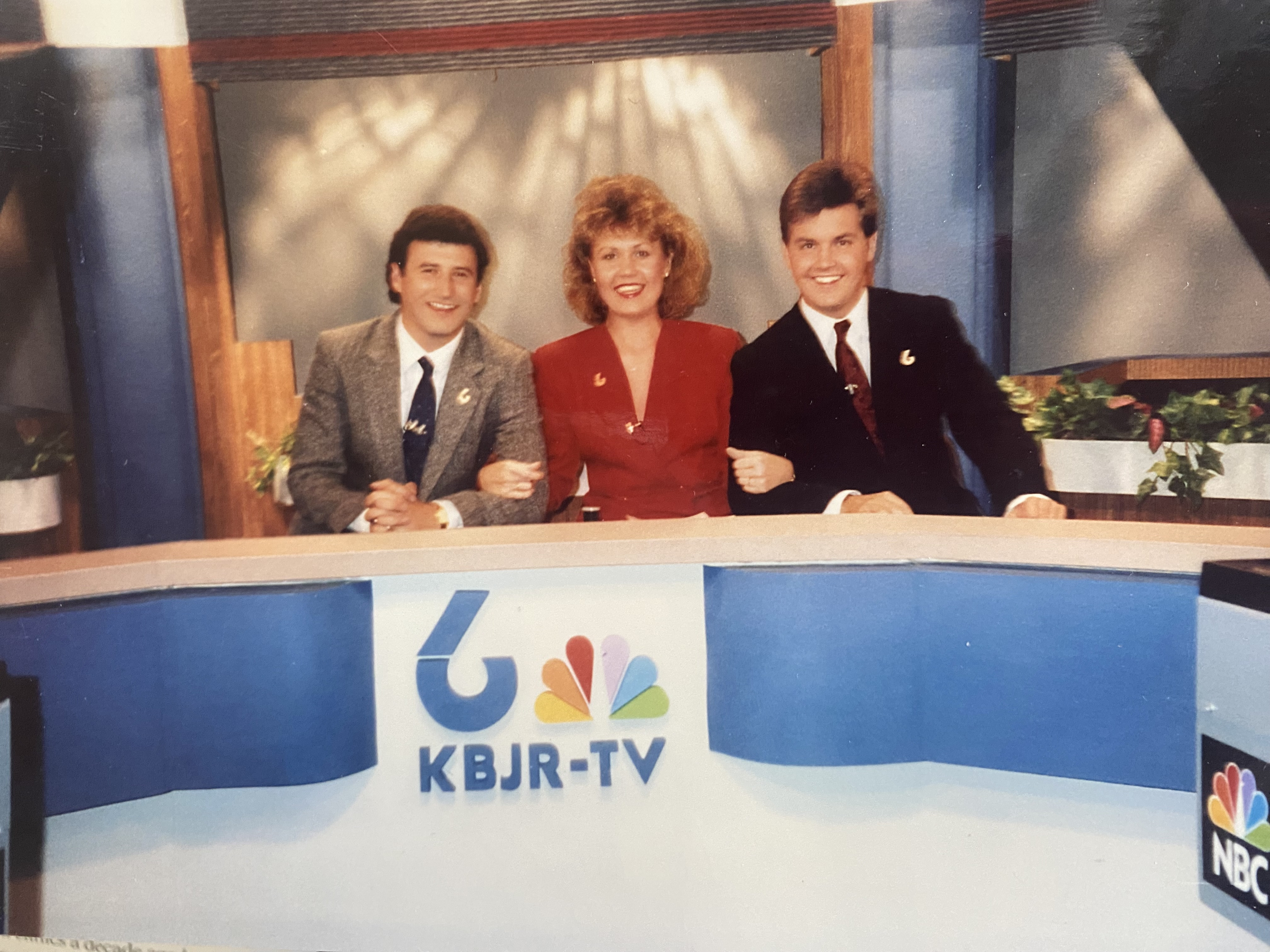
One Sunday night when I was in 8th grade, I caught Stan Turner, then a nightly news anchor at KSTP TV Channel 5 in Minneapolis/St. Paul, broadcasting sports scores and something struck me: I wanted to do that. It became my focus from high school on with three internships in college and a nearly 20-year TV news career.
Do you have any particularly memorable stories from your reporting days?
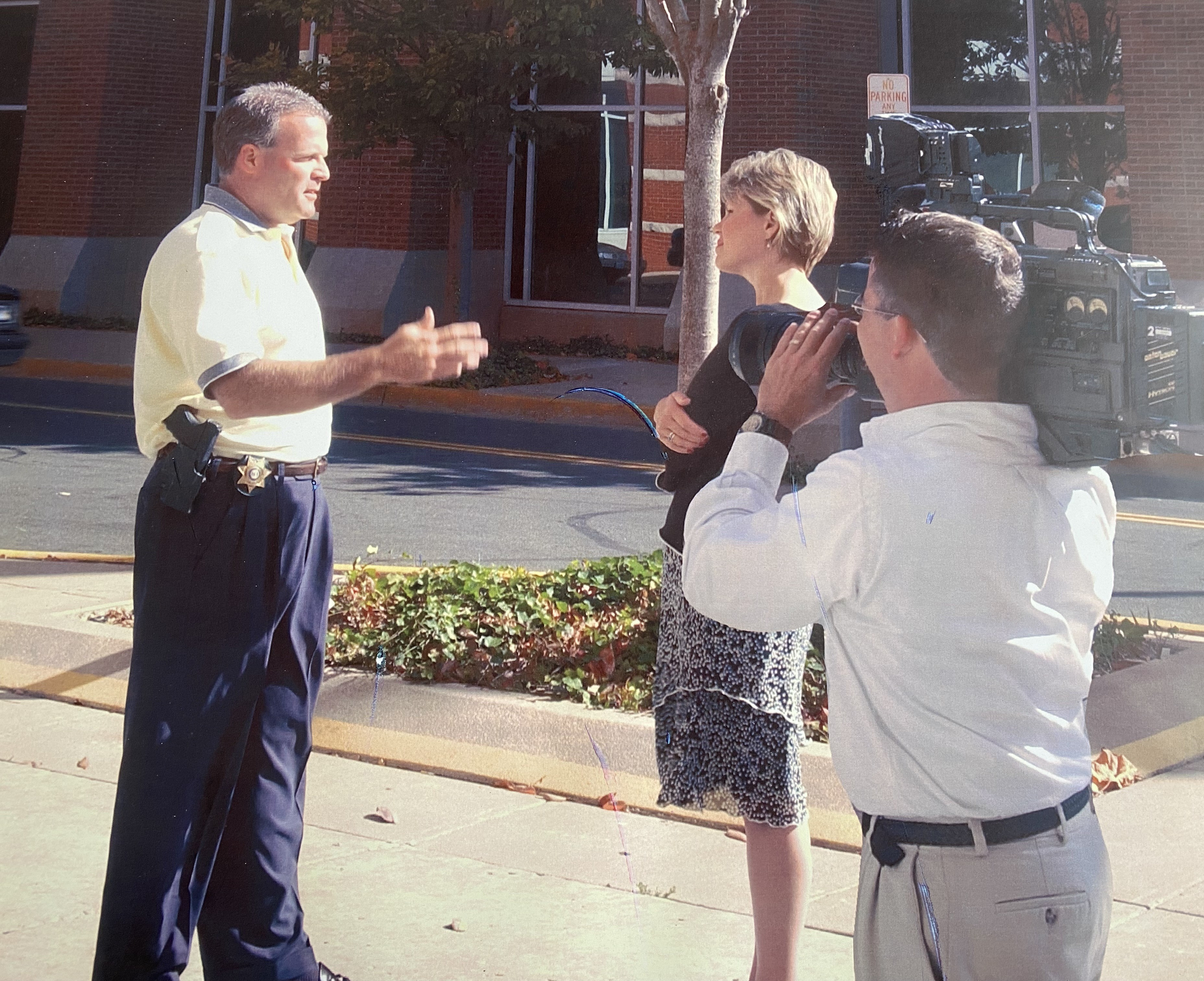
My general assignment gigs took me to Duluth, Minnesota/Superior, Wisconsin; Jefferson City and Columbia, Missouri; Green Bay, and St. Louis, so the experiences are numerous.
It’s wonderful to meet and interview celebrities like Ted Nugent and Carrie Underwood or witness Major League Baseball’s home run race in the late ‘90s (Sammy Sosa and Mark McGuire) and two Rams Super Bowls. But local, state, and national politicians were among my favorite people to cover when I wasn’t assigned breaking news or the crime beat.
I was credentialed for the October 16, 2000, presidential debate between George W. Bush and Al Gore at Washington University in St. Louis. As my photographer Dave Sharp and I waited for the candidates to arrive, we learned from the U.S. Secret Service that a plane carrying U.S. Senator Mel Carnahan, his son, Randy, and Press Secretary Chris Sifford had crashed in a fireball in rural Jefferson County. There were no survivors. The debate was cancelled, and we headed to the scene for overnight live updates requested by TV affiliates across the country. I knew Mel Carnahan, his wife, Jean, and Chris, from my days reporting on state capital politics in Jefferson City. Just a few months prior, I talked to all three of them on and off camera at a St. Louis Cardinals game. There is a photo somewhere in the Missouri State Archives of then Governor Carnahan and the First Lady in costume with me at the annual children’s Halloween party. This was a tremendous loss professionally and personally.
I reported on and was a victim of the Flood of 1993, which swallowed much of Missouri. I remember sleeping on a neighbor’s sofa for a few weeks until I could go home. I learned the hard facts about how lawmakers Christmas-tree a major drug bill that is destined to fail. And when a bill doesn’t pass, the cases of beer and wine still flow into the capital building for the post-end-of-session celebration In 1998, an Air Force One pilot was fired on the spot when the plane with President Bill Clinton on board veered off the tarmac and got stuck in the mud at Willard Airport in Savoy, Illinois. Instead of sharing details about Clinton’s visit to the University of Illinois, I stood in a cornfield and reported on this breaking news as the blinking lights of the plane flashed in the background a quarter mile away. Getting the best shot on location is sometimes a challenge. Our team negotiated with a nearby property owner, who allowed us to park our satellite truck in his driveway. (We accidentally knocked a huge branch off the tree while there. I believe we sent him some logoed TV caps, coffee mugs, and T-shirts for his trouble.)
You've said before that "everyone has a story." I think we often focus on the stories of notable people, or people who find themselves in extraordinary situations. How did you learn to draw those great stories out of "normal, everyday" people.
I first spotted The Rose Man on the sidewalk outside a strip mall as our news crew was driving to another story. He was dressed in a sandwich board to encourage drivers or other passersby to stop and buy flowers for someone they love. When I pitched it to the producers, they were immediately sold. I allowed him to tell his own story, and it was an instant hit. It’s powerful when a reporter retreats and empowers the interviewee to share a first-person account to capture the audience.
After the broadcast, viewers called the newsroom and often stopped me on the street or at events to ask me about The Rose Man. A few years later, his employer called to tell me this beloved local figure was dying of cancer. He shared his story with us one final time. I cannot recall his real name, or if he even disclosed it. He was a simple, gentle and generous man.
(A former TV news colleague of mine produced a longtime weekly feature called, “Everybody Has a Story.” To find a willing participant, he grabbed the local phone book, dropped it open on his desk, placed his finger on a name, and called that person for an interview. It often worked.)
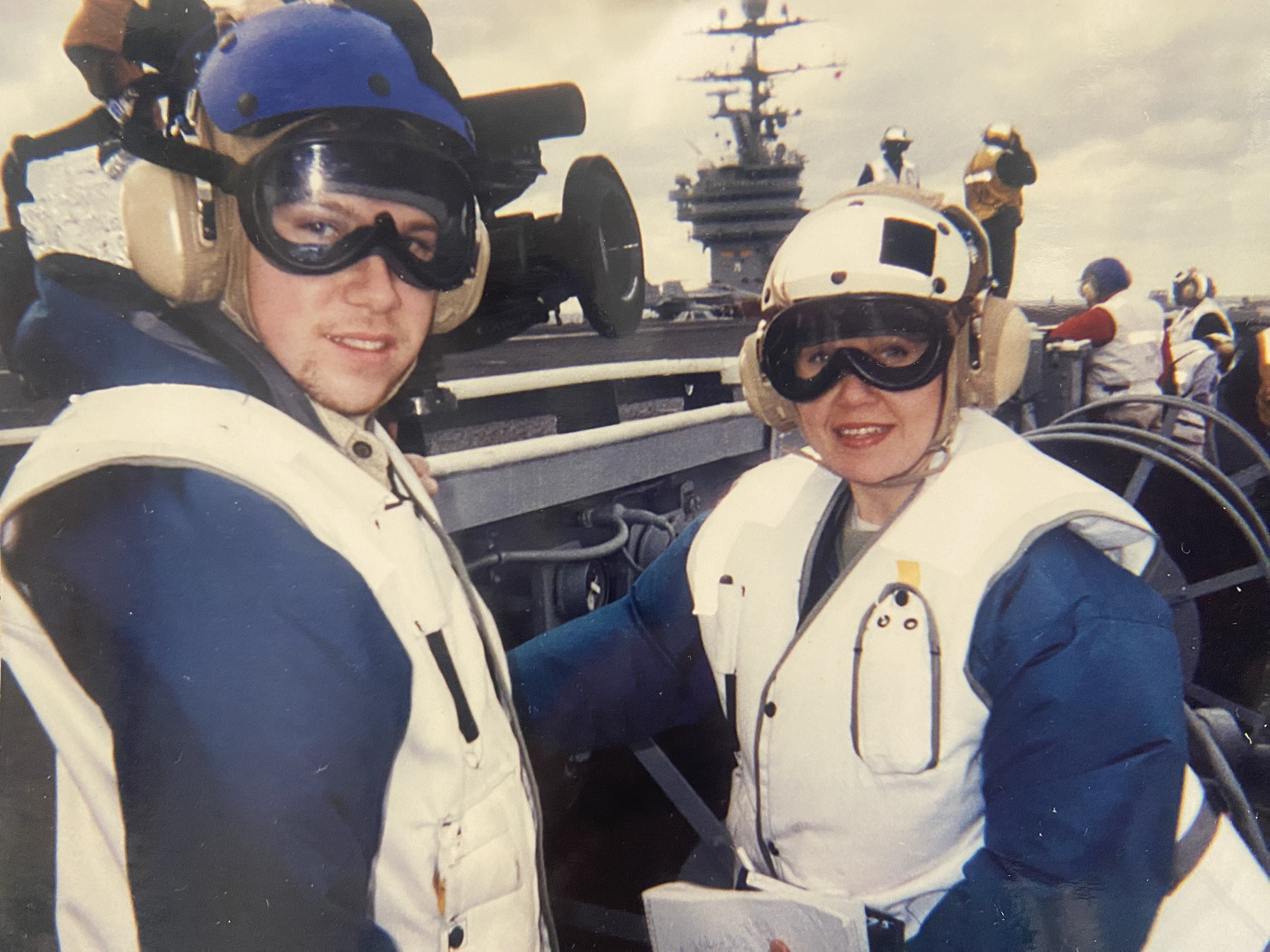
What skills did you carry over from being a reporter to your current role at TRG?
Aside from understanding the basic tentpoles of a good story, I’m not afraid to pick up the phone and ask questions of people – even those I’ve never met. Several of my colleagues have expressed their amazement at how easy this is for me.
Reporters share the facts and have the autonomy to develop the story the way they see it. In marketing, I still enjoy that same freedom. In communications, a good review of copy is required by a colleague or two to check for typos, grammar, and syntax.
You were a professional mom for nearly four years...what did that period teach you about yourself and what you wanted out of life?
Never feel bad about taking the time to raise a decent human being. I struggled when I transitioned from the daily rush of news gathering to living in a new city and home with my husband and our six-month old son. It was difficult not contributing my talents professionally. But I learned that raising a child meant I was committed to the most demanding and important role of my life. I dove in as best I could. When my son started kindergarten, I went back to work part-time at TRG Marketing. I was a hybrid worker before it was cool.
My best advice is to include this period as a professional mom or dad on your resume. It explains the work gap and shows your mastery of the soft skills that are important in the workplace. I prioritized and managed time well as a mom, much like I did when backtiming a news broadcast as a producer. Stay-at-home parents are adept at crisis management, negotiating and conflict resolution. After several years of living on one income, you develop a resourcefulness to maximize the family finances and discover there are creative solutions to any problem.
Do you find that your time as a journalist helps you pitch other journalists? If so, how?
Whenever a reporter requests an interview or written content from a client, the first question I ask is, “What’s your deadline?” I never send a pitch to a reporter or editor unless the topic is a good fit for their beat or media outlet. I don’t sweat it if the media take a pass. When there are 300+ new emails in a reporter’s inbox each day, you understand why few pitches ever make it as a story online, in print or on air. The news business has revolving doors. Some people are on staff for six months or a year, then move on to another market or career. Harbor good relations with the journalists who take the time to work with you while you can.
What were some of the biggest things you had to learn after assuming your role at TRG Marketing?
My degree is in print journalism from the University of St. Thomas, so I never took a PR class to understand how to write a news release. I often disregarded them in favor of creating my own story around the main narrative.
The first time I was assigned to write a news release for a client, I asked if I could interview the president of an association. My colleagues were amused. I have to make up a quote? When you work in a facts-only world for 20 years and it’s ingrained that misquotes are an automatic “F” from your days as a student in Dick Youngblood’s newswriting class, it’s not easy to adapt to new rules. I take copious notes when talking to clients to better understand their approach and how they think, plus I can reference them later to draft additional content. Paying attention to detail is a skill I picked up in TV news. (I went through a lot of reporter’s notebooks over the years.)
Was it hard to adjust from the adrenaline of being on your feet and being on camera to having a more traditional behind-the-desk, 9-to-5 job? How long did that adjustment take for you?
I remember the Friends episode where Chandler and Rachael are helping Ross move a sofa upstairs to his apartment and he keeps yelling, “Pivot!” That’s what it was like for me shifting from news to the office. The pivot was a struggle. I missed being in the field, meeting new people, and asking them questions. In news, you are always chasing a deadline. I completed my marketing projects within minutes and hours rather than days or a week. After a few years, I learned to pace myself. I don’t have to finish every project in a day.
I’m still on my feet all day at my standing desk and get so engrossed in reading and writing on my laptop that I may not move for an hour or more. I’m trying to break that habit.

In journalism, you could tell the story however you saw fit. When you work in marketing or PR, you must fit the story into a certain narrative that your client wants to propagate. To what extent did you find that stifling and to what extent is that challenge rewarding?
Marketing for B2B or B2C is about client service. I never feel restrained when sharing the message of a professional services firm or association. There is an incredible amount of autonomy and creativity in content marketing whether you’re developing e-newsletters, website articles, social media posts, or award nominations.
The question I keep in mind: How can I best promote them based on their brand, mission, and values? If a client prefers a certain approach, I work with them to achieve that goal.
The market for storytelling is a lot more saturated now than it was when you first entered the business. How do you stand out? Has your theory of getting and holding attention changed at all?
My core belief in what makes an exceptional story hasn't changed at all. The fundamentals are more important than ever.
There was no internet when I was first covering the news in the late 1980s. People's attention was a captive resource. If you were on the evening news, you had a larger and mostly guaranteed audience. Today, every person with a phone is a broadcaster. Every platform from X to TikTok is competing for the same few seconds of our brainpower. The market is saturated with information and a lot of noise.
Written content is simply not enough anymore. You have to include images and videos with the copy, whether it be in a social media post, e-newsletter or website article.
Technology has changed quite a bit since you've been in the communications business. What are your techniques for adapting to those changes?
Artificial intelligence is here and not going away any time soon. I read articles, listen to webinars, and follow AI influencers on social media. I want to learn everything I can about it. AI is a resource to improve my skills. It is not a replacement for critical thinking.
What was rewarding to you about your old job and what's rewarding to you about your new one?
For me, it was attending the morning news meeting with a solid tip I developed from a source that producers agreed was worth pursuing. Following a day-long effort of gathering facts, interviews and video with a photographer, then drafting and editing, my story would meet the deadline and hit air without any issues. The next day, the process starts over again. As one of my former colleagues used to say, “You are only as good as your last story.”
Today, I appreciate the relationships I have with my marketing clients. When there is this terrific sense of collaboration and trust between us, it builds confidence. This allows the partnership to grow beyond expectations.
If someone early in their careers likes storytelling and is split between journalism and PR/marketing, what advice would you give them?
Choose journalism first. Write as much as you can. Learn how to tell stories, meet deadlines, and work with people from all walks of life. Ask questions but don’t make yourself part of the story, unless the presentation somehow requires it, (Think YouTube-style news reporting that is surfacing across broadcast media.) You might love the newsroom for life. Imagine missing out on that.
If you leave the profession and step into a marketing career, your writing, communication and critical thinking skills will be in-demand. Surround yourself with people who are smarter than you are. Be flexible and have the courage to accept change. Never stop learning.
Interview by Andrew Goldstein